Building a house in Brittany involves dealing with an oceanic climate, sometimes strict local regulations, and an increasingly tense land market. Since 2025, building permits for individual housing have increased by about 20% in the region according to DREAL Bretagne, which changes the conditions for accessing land and the availability of craftsmen.
Climate and technical constraints specific to construction in Brittany
The Breton oceanic climate is characterized by high rainfall, frequent winds, and air laden with salt along the coast. These parameters are not trivial: they dictate the choice of materials, the orientation of the building, and the sizing of certain technical elements.
A facade coating that lasts fifteen years in a continental climate can degrade much faster in the face of the heavy rains of Finistère. The waterproofing of windows and roofs is the first aspect not to be undersized. Double-sealed windows, natural slate roofs, and oversized gutters are not about comfort but about durability.
The orientation of the house also deserves special attention. The prevailing winds generally come from the southwest. Positioning the main openings to the south while protecting the west facade with a buffer volume (garage, pantry) reduces thermal losses and limits exposure to bad weather.
This choice of placement has direct consequences on the energy performance of the building, a point that project owners can explore further to learn more on Web de Bretagne and its resources dedicated to regional construction.
RE2020 and building permits in Brittany: the regulatory framework to know
The environmental regulation RE2020 applies to all new constructions. Since July 2026, a new carbon threshold comes into effect for permits submitted after this date. In practical terms, materials with a high carbon footprint (traditional concrete, certain bricks) must be offset by low-carbon solutions elsewhere in the project.
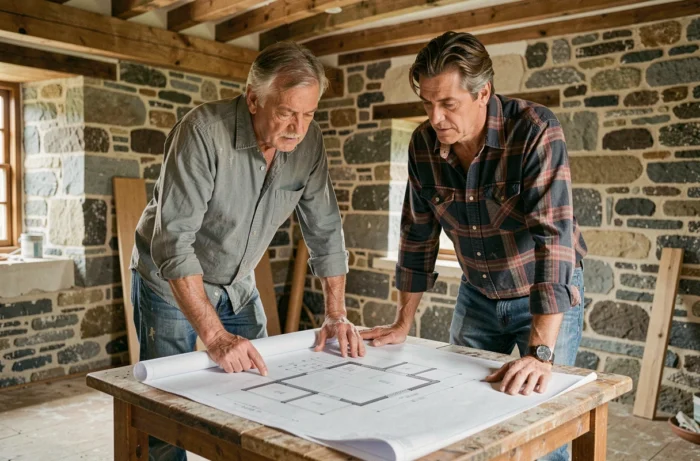
In Brittany, this tightening favors local industries: construction wood (maritime pine, Douglas fir), hemp for insulation, raw earth in certain areas of the central region. A project submitted after July 2026 must integrate these constraints from the sketch stage, not at the building permit stage, under penalty of having to revise the plans.
PLU and local rules: significant variations from one municipality to another
Beyond RE2020, each municipality applies its Local Urban Plan (PLU). In coastal areas, the Coastal Law significantly restricts construction possibilities within the 100-meter band and beyond, depending on the municipalities. In protected sectors (classified sites, surroundings of historical monuments), the Architect of the Buildings of France can impose specific materials, facade colors, or roof slopes.
Before signing a compromise for a plot of land, thoroughly reading the zoning regulations of the PLU is a step that many project owners overlook. A buildable plot does not mean that one can build whatever they want.
Brittany land market: anticipating competition for plots
The median price of houses in Brittany has risen by more than 40% over five years. This dynamic also drives land prices, with significant disparities depending on the sectors.
- Coastal municipalities (Vannes, Quimper, Concarneau, Auray) show the highest prices and an increasingly rare land supply
- Developing peri-urban municipalities offer a better surface/price ratio, but demand there is rapidly increasing since the resumption of construction starts
- Rural areas in central Brittany remain accessible, with larger plots, provided one accepts a distance from employment hubs
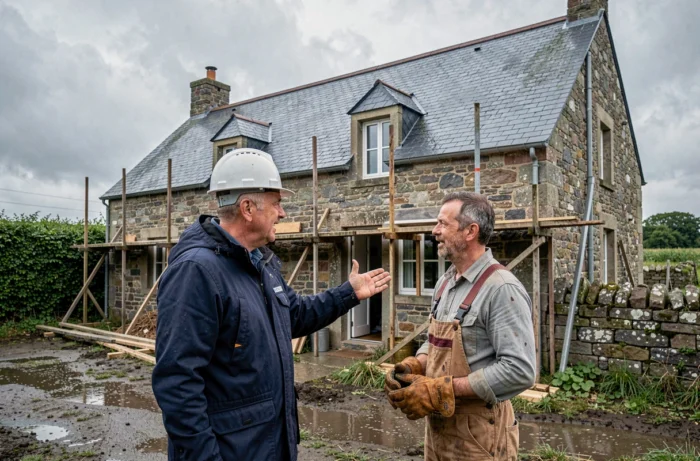
With construction starts up by about 30% in the recent period, pressure on craftsmen and construction companies is intensifying. A project launched without securing its contractors risks facing delays of several months.
Construction budget in Brittany: the items to negotiate
The overall cost of a house project is divided into three main blocks: land, construction itself, and ancillary costs (connections, outdoor developments, taxes). The land often represents the most variable item, with considerable discrepancies between the coast and the inland areas.
Regarding construction, the choice of construction method weighs heavily. A wooden frame house generally costs more per square meter than a block construction, but offers better native thermal performance and a faster construction process. In Brittany, the local wood industry can sometimes reduce this gap through short supply chains.
Finishes and partial self-construction
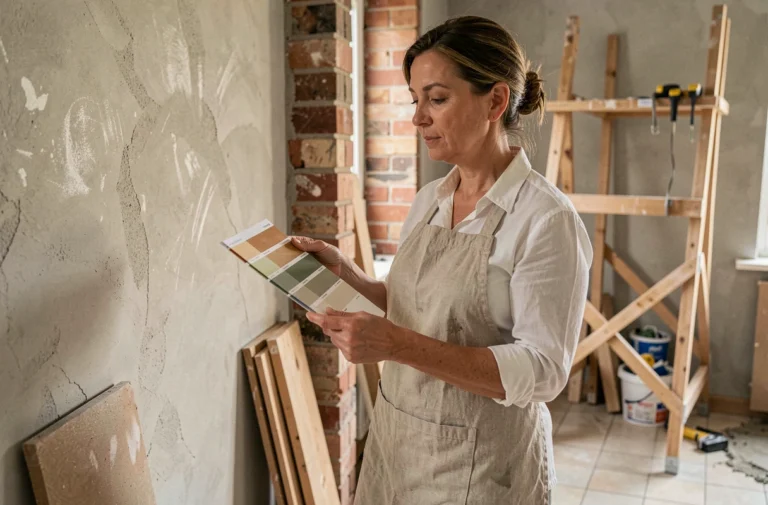
Doing some finishes yourself (painting, laying floor coverings, outdoor developments) can reduce the final bill. However, this option requires having the necessary time and skills. A poorly executed finishing job can degrade the property’s value upon resale.
The items where self-construction is relevant include:
- Interior painting and wallpapering
- Landscaping and fencing
- Laying floating floors or simple tiles in dry rooms
Items to be entrusted to professionals remain electricity, plumbing, and anything related to waterproofing, under penalty of losing the ten-year guarantees.
The Breton new construction market is going through a marked recovery phase, with direct consequences on timelines, prices, and the availability of professionals. Securing the land, the builder, and the construction schedule as early as possible remains the best protection against the uncertainties of a tightening market.