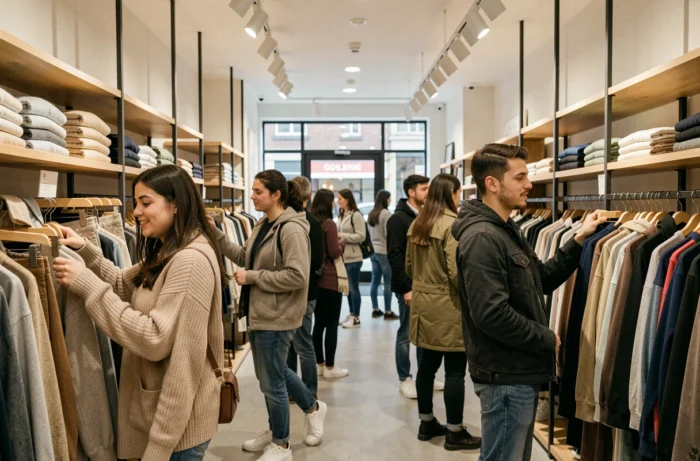
Zara refreshes its in-store collections several times a week. This pace, which long defined fast fashion, is no longer enough to set the brand apart. Its competitors are no longer limited to clothing retailers: online platforms such as Shein and Temu, basics brands such as Uniqlo, and even second-hand resale services are now vying for the same customers.
Zara’s competitors, depending on how you shop
Comparing brands without specifying what the customer needs is like comparing tools without knowing what the job involves. Three distinct shopping habits shape the competition around Zara.
The first is refreshing your wardrobe often at a low price. In this area, H&M remains Zara’s longstanding rival, with a comparable store network and slightly lower prices. Shein and Temu compete on price too, but operate exclusively online, with no physical stores or opportunity to try items on before buying.
The second is shopping for durable basics. Looking for a white T-shirt or chinos you can wear for several seasons? Uniqlo focuses on how long its clothes last, not on what’s new. Its value proposition is radically different from Zara’s, even though the two retailers can be found in the same shopping centers.
The third, more recent trend is resale and repair. Retailers such as H&M and Kiabi are developing second-hand services, putting them in direct competition with platforms such as Vinted. Zara, meanwhile, is less advanced when it comes to circular services. When mapping Zara’s main competitors, looking at shopping habits provides a more nuanced picture than simply listing brands.

H&M and Mango vs. Zara: in-store fast fashion
H&M and Zara share a similar business model: a global network of stores, frequently refreshed collections and affordable prices. The difference lies in their supply chains. Zara manufactures a significant share of its clothes in Europe (Spain, Portugal and Morocco), allowing it to respond to trends very quickly. H&M outsources more production to Asia, resulting in longer lead times but lower manufacturing costs.
Mango targets a slightly more premium market than Zara, with well-tailored cuts and sometimes more refined fabrics. The Spanish brand remains a direct competitor, especially for customers looking for a style similar to Zara’s with a slightly higher-quality finish.
What really sets these three retailers apart
- Stock turnover: Zara refreshes its in-store arrivals every few days, while H&M works on slightly longer cycles.
- Entry-level prices: H&M offers very low-priced ranges (basics for just a few euros), while Mango starts at a higher price point.
- Online presence: all three brands sell online, but physical stores remain their main sales channel, unlike Shein or ASOS, which operate entirely online.
Shein and Temu: competition from online platforms
Shein and Temu represent a radically different business model. No stores, no in-store stock. Everything runs through a mobile app and centralized warehouses. Their prices are in a league of their own compared with Zara’s, sometimes a third or a quarter of the price for similar items.
This price-based competition also raises regulatory concerns. European rules on the compliance of imported products add another consideration to comparisons based solely on price.
For customers, the difference is clear in everyday shopping. There’s no way to try items on, delivery times vary, and fabric quality is often lower. Shein competes with Zara through its relentlessly refreshed catalog, not through the shopping experience.
Uniqlo and basics: a competitor Zara can’t ignore
Have you noticed how a Uniqlo Supima cotton T-shirt or Heattech base layer can last through several winters without losing its shape? That’s precisely what the Japanese brand promises: simple clothes designed to last, not to follow trends.
Zara and Uniqlo target different shopping needs. Zara caters to the desire for something new, while Uniqlo helps customers build a reliable wardrobe. The two brands can be found in the same shopping areas, but their customers aren’t looking for the same thing at the same time.
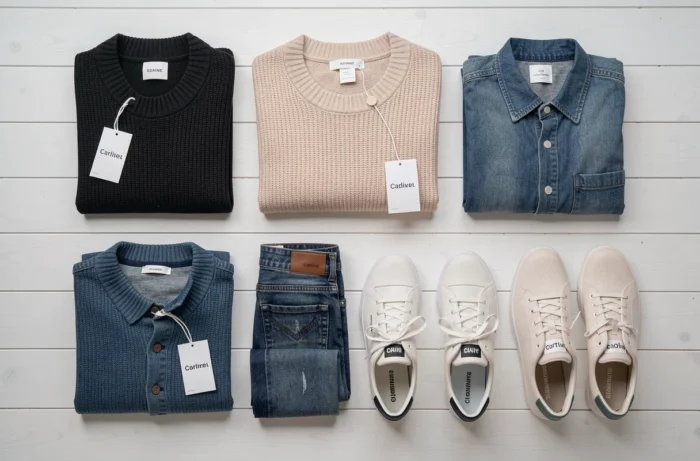
This positioning makes Uniqlo a formidable competitor in a specific segment: functional basics. In this area, Zara is less relevant because its clothes are designed to have a shorter lifespan, in keeping with its rapidly refreshed collections.
Circular fashion and second-hand clothing: an area Zara has yet to embrace
The second-hand market continues to grow in France. Vinted dominates peer-to-peer resale, but fashion retailers are getting involved too.
- H&M offers an in-store clothing collection service, with discount vouchers in return.
- Kiabi has launched its own second-hand clothing resale platform.
- Some brands have introduced repair workshops to extend the life of their clothes.
Zara is lagging behind when it comes to circular services. For customers who want to resell or repair their clothes, the retailer offers no structured alternative comparable to those available from its direct competitors. This gap is becoming a deciding factor for a growing number of consumers.
Why this matters when comparing brands
Zara’s competitors are no longer judged solely on how quickly they refresh their collections or how much they charge. The ability to support a garment after purchase—through resale, repair or recycling—is becoming a point of differentiation. Customers who buy from H&M can resell their clothes through the brand’s own channel. At Zara, they have to use a third-party platform.
Zara’s competitive landscape is therefore shaped by three areas: fast-changing styles (Shein, H&M), durable basics (Uniqlo) and after-sales services (Vinted, Kiabi, H&M). The most relevant competitor depends on what you expect from your clothes, not on the logo on the label.