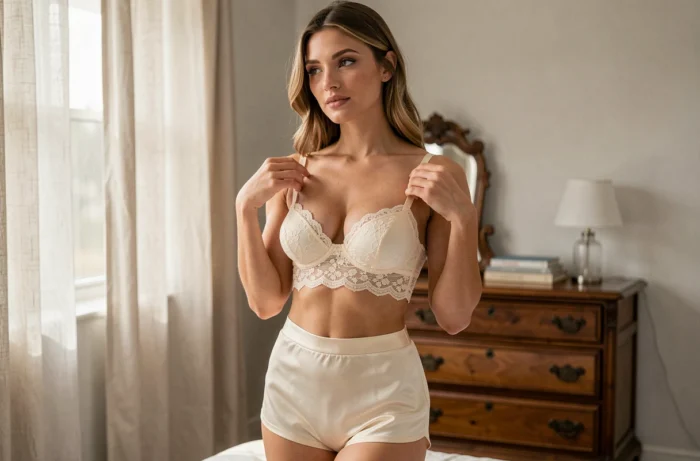
What criteria truly distinguish lingerie collections that work on a daily basis from those that remain at the bottom of the drawer? Between materials, cuts, and new European regulatory constraints, the lingerie market is undergoing a transformation phase where comfort, durability, and stylistic boldness are now measured on concrete bases.
European Regulation and Lingerie: What Changes for Upcoming Collections
Lingerie fashion trends are no longer limited to colors or cuts. The European regulatory framework is reshaping the very design of pieces, and this dimension remains largely absent from usual analyses.
The European Regulation 2024/1781 on sustainable ecodesign, which came into effect on July 18, 2024, lays the groundwork for the digital product passport. The specific obligation for textiles still depends on a specific delegated act, but the legal framework exists. For lingerie brands, this means increased traceability of materials, manufacturing processes, and the end-of-life of items.
Another concrete deadline: the ban on destroying unsold goods for large companies starting July 19, 2026. Collections will need to integrate this constraint from the design phase, favoring more fitted series, reuse, or secondary circuits. Medium-sized companies will be affected later.
The extended producer responsibility (EPR) will also impact price and design. Brands will contribute to the financing of collection, sorting, and recycling, with contributions adjusted according to the durability and recyclability of products. A synthetic lace bodysuit that is difficult to recycle will cost more to produce than a piece designed for disassembly.
The pieces found in the fashion section of Lingerie & Séduction already illustrate this evolution towards collections that incorporate these sustainability parameters without sacrificing elegance.
Wire-Free Lingerie and Bralettes: A Comparison of Dominant Cuts
The wire-free segment concentrates the majority of demand. Several formats coexist, with very different uses and support depending on the cut.
| Type of Cut | Support | Main Use | Suitable Cups |
|---|---|---|---|
| Triangle Bralette | Light | Everyday, visible layering | A to C |
| Seamless Bra | Moderate | Light sports, office, night | A to D |
| Soft Balconette | Good | Low-cut outfits, natural shaping | B to E |
| Bodysuit with Integrated Bra | Good to Firm | Visible piece, light shaping | A to E |
The soft balconette offers a shape that the triangle bralette cannot reproduce beyond cup C. However, the bralette is better suited for layering under a blazer or an open shirt, which explains its increasing presence in visible collections.
The bodysuit with an integrated bra combines support and versatility, worn both as underwear and as a central piece of an outfit. This format is gaining ground because it serves two functions with a single purchase.
Lace, Microfiber, Modal: Which Materials for Daily Use
The choice of material determines the lifespan, thermal comfort, and ease of care of a lingerie piece. Recent collections often combine two materials in the same article, which complicates recycling but improves wearability.
- Lace remains the dominant stylistic marker, used on bras, panties, and bodysuits. Sculptural patterned laces are gradually replacing flat laces, with visible relief even under thin clothing.
- Seamless microfiber dominates the comfort segment. Its smooth surface eliminates marks under fitted clothing (sheath dress, high-waisted pants). It dries quickly and withstands frequent washing.
- Modal, a fiber derived from wood cellulose, offers a softness comparable to silk with better resistance to pilling. It positions itself as an alternative to synthetic fibers in eco-friendly ranges.
The friction point concerns multi-material pieces. A bra combining polyester lace and a modal lining poses a direct recyclability issue, which clashes with future EPR requirements. Brands that simplify the composition of their pieces are anticipating this constraint.
Colors and Visible Lingerie: The Palettes That Structure Collections
Chromatic boldness is not limited to burgundy or classic red. Current collections are organized around two distinct poles.
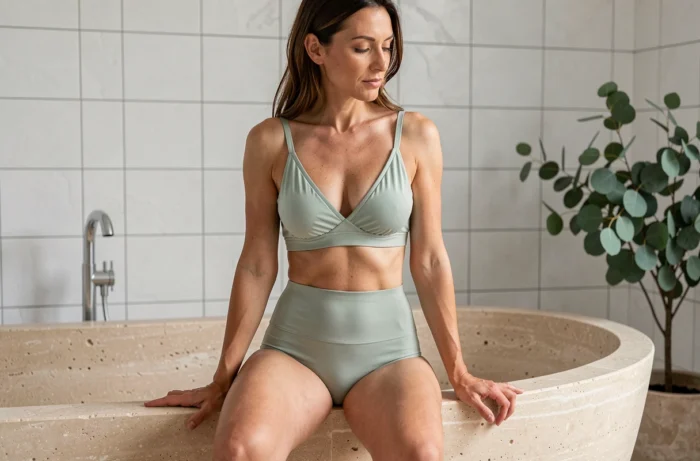
The first pole groups soft shades (nude in various skin tones, powder pink, ivory). These colors remain the functional base of the lingerie drawer, worn under light or translucent clothing. Their role is both technical and aesthetic.
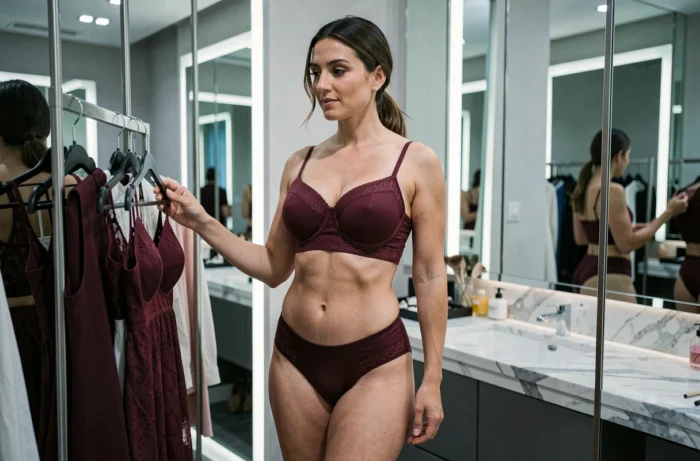
The second pole gathers bold colors (deep burgundy, midnight blue, forest green, graphic black). These shades serve lingerie worn as a visible piece, under an open jacket, a sheer top, or paired with a high-waisted skirt. The thong and high-waisted panties in these colors are intentionally worn above the waistband of pants, as an assumed stylistic element.
In contrast, multicolored and geometric prints occupy a more limited niche, often restricted to capsule collections or occasional collaborations. Their rotation is quick and their catalog lifespan short.
Femininity and Everyday Lingerie: What Market Data Confirms
Purchases are concentrated on versatile pieces wearable in any circumstance. The balconette bra, bodysuit, and high-waisted panties form the most represented trio in new collections. This refocusing reflects a clear choice: buyers prioritize frequency of use over occasional impulse buys.
Femininity in lingerie no longer passes through a single register. It expresses itself as much in a minimalist bodysuit worn under a suit as in a sculptural lace set reserved for intimacy. The choice of cut and material matters more than the brand.
European regulatory constraints will accelerate this rationalization. Collections will feature fewer references, materials that are easier to recycle, and adjusted prices to incorporate EPR contributions. The lingerie that will enhance femininity in everyday life will be the one that keeps its promises of comfort, style, and durability over time, not just in product photos.