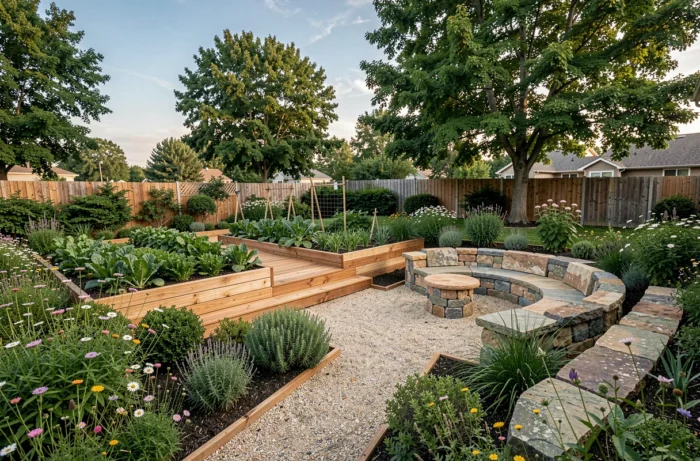
Successfully designing your garden involves measuring what actually works on the ground, not just what looks good in a photo. Which layouts withstand dry summers, minimize maintenance, and enhance an outdoor space over time? Here are ten concrete ideas, listed in no particular order, to transform your garden into a space that is both functional and pleasant to live in.
1. Landscape Swale for Managing Rainwater
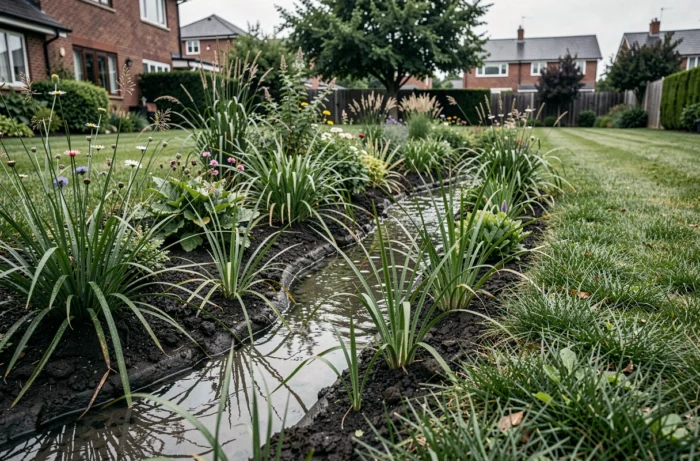
A swale is a shallow, vegetated depression that collects and infiltrates runoff water directly on your plot. This approach to de-impermeabilization promotes infiltration at the point of runoff, reduces stagnation risks, and recharges the soil with water.
The Île-de-France Region explicitly incorporates this type of device into its de-impermeabilization and renaturation program, published on September 16, 2026. Specifically, a swale planted with grasses or marsh irises effectively replaces a concrete gutter along a pathway.
To delve deeper into landscaping on Le Jardin D’Épices, you will find additional insights on water management in the garden and plant structuring.
2. Plant Palette Adapted to Future Climate
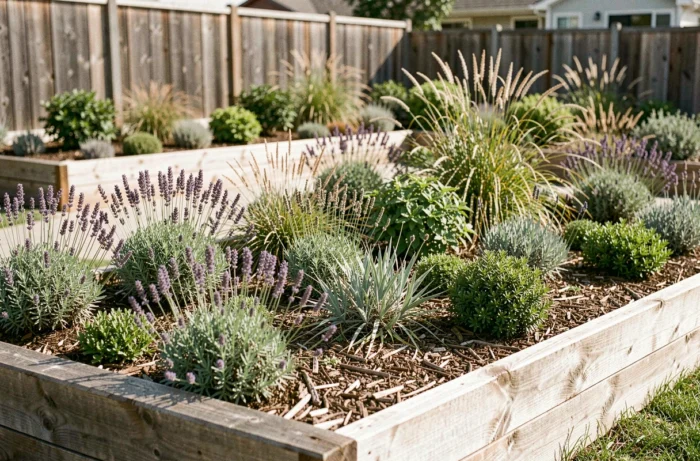
Choosing plants solely based on current exposure is no longer sufficient. France 3 Pays de la Loire documented on September 6, 2026, the experiments of communities and gardeners testing new drought-resistant plant combinations.
No universal list works everywhere: each species must be tested according to the soil and local conditions. Lavenders, yarrow, shrubby sages, and grasses like fescue handle dry spells better, but their behavior varies from one site to another.
3. Drainage Surface for Patios and Pathways
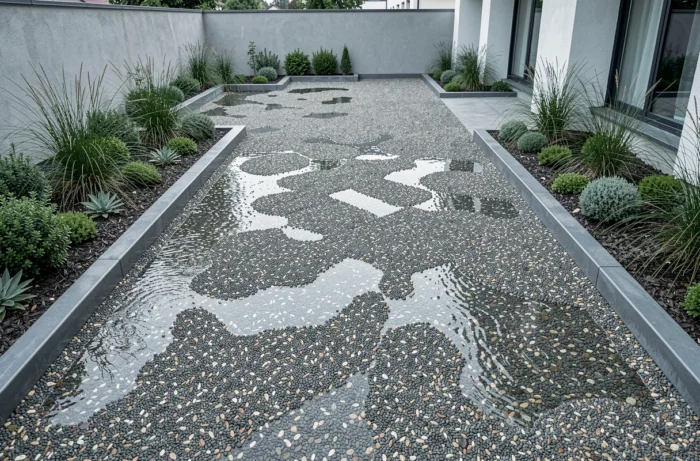
Permeable paving, stabilized gravel, natural stone laid on a sand bed: these surfaces allow water to infiltrate instead of directing it towards the roadway. In contrast, a smooth concrete patio impermeabilizes its entire surface and worsens runoff.
The choice of material depends on the use. A frequently used pedestrian path holds up well with compacted gravel. A dining area requires a more stable surface, such as reconstituted stone with open joints.
4. Thick Mulch for a Water-Efficient Garden
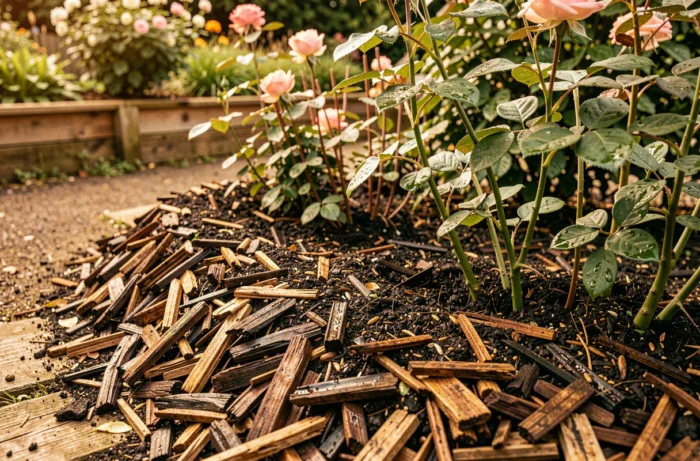
A garden presented as “irrigation-free” actually relies on a precise water strategy. Organic mulch (wood chips, dead leaves, straw) applied in a sufficiently dense layer reduces evaporation and protects soil microbial life.
Combined with improved soil water retention (adding compost, superficial tilling), mulching allows for the elimination of summer watering for most adapted perennials. The results can be seen as early as the second season when the roots have explored a soil that remains cool.
5. Raised Wooden Deck to Structure Levels
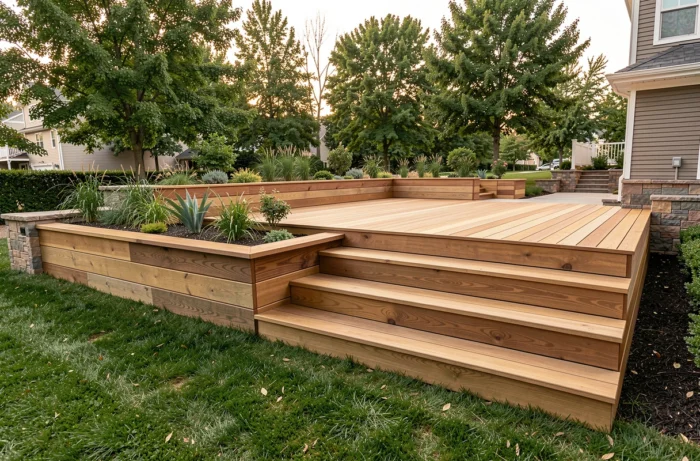
Creating a slight slope between the deck and the rest of the garden naturally defines the dining or relaxation area without walls or fences. Wood (treated pine class 4, larch, composite) remains the most commonly used material for this type of structure.
A often-overlooked point: ventilation under the decking. Without sufficient air space beneath the boards, moisture stagnates and accelerates degradation. Planning for elevated joists on adjustable pads resolves this issue and facilitates drainage underneath.
6. Raised Square Vegetable Garden
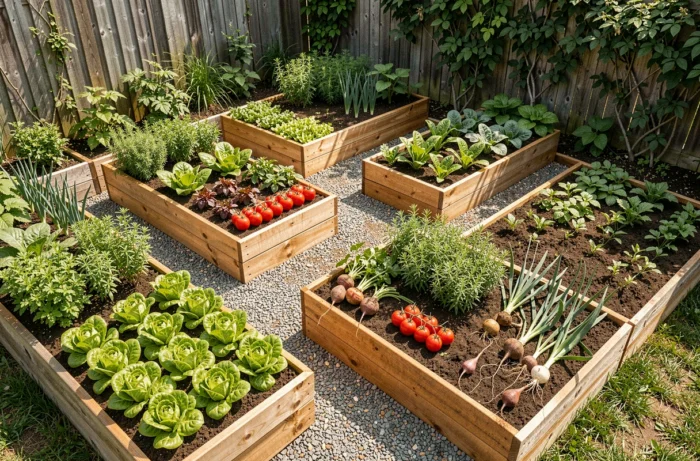
The raised vegetable garden concentrates fertile soil over a small area, limits weeding, and makes cultivation accessible without bending down. For a modest outdoor space, two or three standard-sized squares are enough to produce herbs, salads, and tomatoes.
Untreated wood is preferable for food use. Larch or chestnut offers good natural durability without the risk of product migration into the soil.
7. Low Voltage Solar Lighting for Path Marking
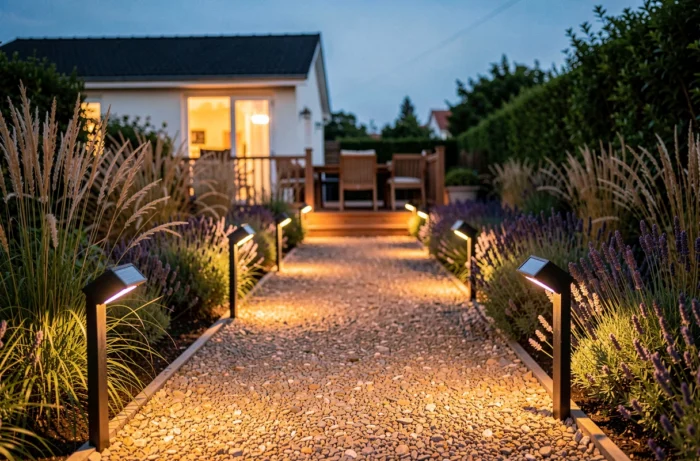
Solar bollards placed along pathways or around the patio provide nighttime circulation comfort without electrical trenching. Their autonomy depends on the sunlight received during the day, which excludes very shaded locations.
In contrast, buried mains-powered lighting offers more power but requires wiring work. For most residential gardens, low voltage solar lighting meets path marking needs without installation costs.
8. Mixed Hedgerow Instead of Monospecific Thuja
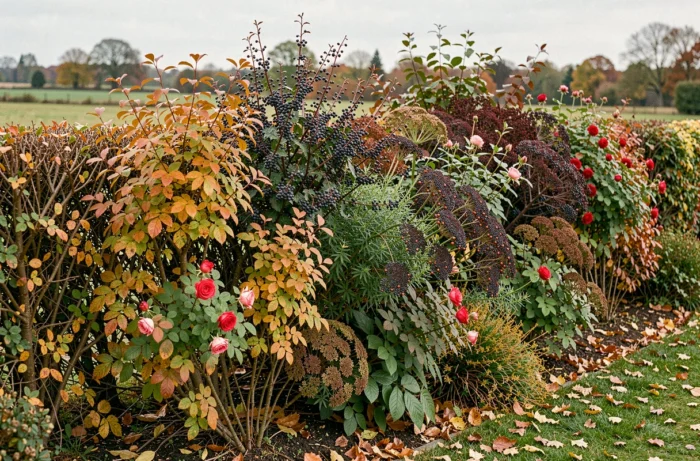
A hedgerow composed of several species (privet, photinia, eleagnus, viburnum) offers greater ecological and visual interest than a line of thuja. Plant diversity limits the spread of diseases and attracts garden helpers (birds, pollinating insects).
The mixed hedgerow requires less rigid pruning than a monospecific alignment. Two trims per year are generally sufficient to contain growth, compared to three or four for a thuja poorly suited to the soil.
9. Natural Stone Relaxation Area
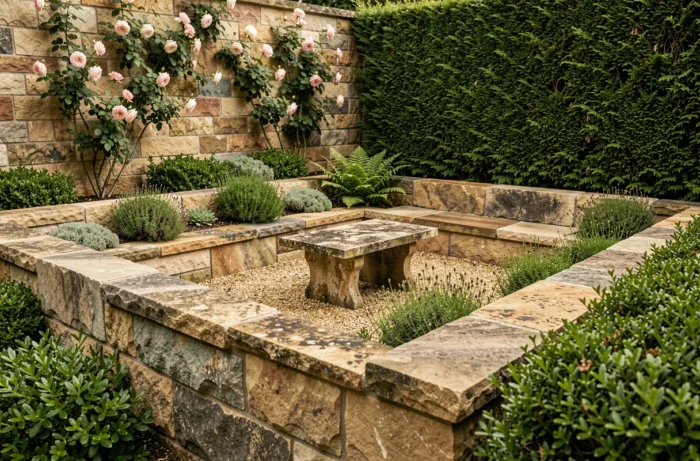
A low wall made of dry stone or reconstituted stone creates a warm and durable outdoor lounge space. The stone absorbs heat during the day and releases it in the evening, extending comfort in the shoulder season.
The cost of natural stone paving exceeds that of concrete, but its longevity compensates for the difference in the long term. Maintenance is limited to annual cleaning, without surface treatment.
10. Rainwater Harvesting System Integrated into the Garden
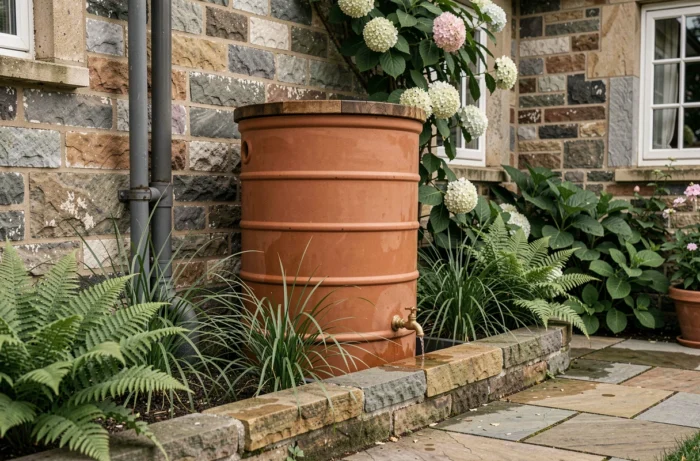
Connecting a tank to the gutter system allows for the storage of a volume of free water for irrigating the vegetable garden and flower beds. Buried models free up space and supply a low-pressure circuit by gravity or pump.
Combining water harvesting, mulching, and adapted plants forms the triptych of a resilient garden. This system reduces dependence on the drinking water supply during summer restrictions, a factor that increasingly weighs in the design of outdoor spaces.
| Layout | Water Impact | Annual Maintenance |
|---|---|---|
| Landscape Swale | Local infiltration, reduces runoff | Low (mowing once or twice a year) |
| Drainage Surface | Maintained permeability | Occasional weeding of joints |
| Thick Mulch | Reduces evaporation | Partial renewal each autumn |
| Water Harvester | Storage for irrigation | Cleaning the filter once a year |
Every garden layout benefits from being thought of as a system where water, soil, and plants interact. The ideas listed here share a common thread: reducing dependence on watering, limiting impermeable surfaces, and choosing materials that age without heavy maintenance. The first useful step remains to observe your land for a full season before finalizing a plan.