
Having style doesn’t depend on the number of pieces in your closet. A well-thought-out, seasonally adapted wardrobe often yields better results than an overloaded closet filled with items worn only once. Current fashion trends confirm this direction: fewer impulsive purchases, more coherence between pieces, and concrete tools to organize outfits on a daily basis.
Capsule wardrobe: building a four-season wardrobe
Have you ever opened your bursting wardrobe feeling like you have nothing to wear? The problem rarely lies in the lack of clothes. It comes from the lack of structure.
The capsule wardrobe involves selecting a foundation of versatile pieces that work together, then adding a few specific items for each season. In practice, a four-season foundation relies on neutral basics (well-cut jeans, straight pants, solid t-shirts, shirts) complemented by mini-capsules for each use: office, weekend, special occasions.
The idea is not to limit yourself to black and white. It’s about eliminating orphan pieces, those that don’t match anything else in the wardrobe. Following fashion on Topitop helps identify trendy pieces that fit into this type of wardrobe without throwing it off balance.
With each change of season, the rotation is simple. We store away heavy or light pieces that are no longer useful, and we bring out three or four that are suitable for the weather. Fewer pieces but more possible combinations, that’s the principle.
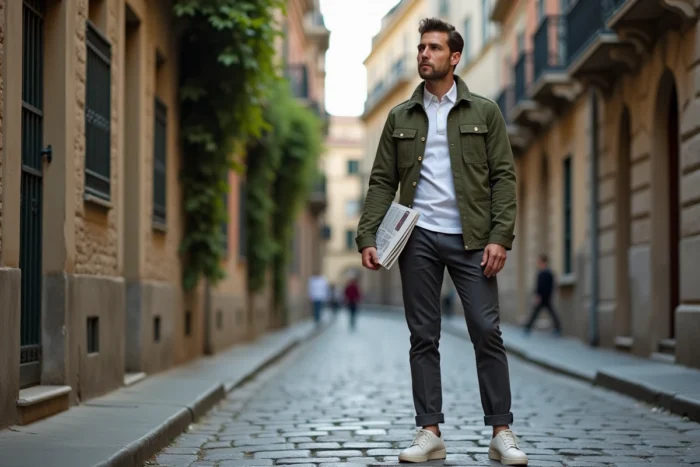
Colors and materials to prioritize by season
Staying stylish year-round means adapting your color and material choices to the rhythm of the seasons, without starting from scratch each time.
Spring and summer: focus on lightness
Linen, lightweight cotton, and breathable blends remain the best allies for warm months. In terms of colors, soft shades (beige, sky blue, off-white) provide an easy-to-accessorize base.
To add character, just one strong piece is enough. A colorful short jacket or a graphic print dress effortlessly transforms a neutral look. One bright element per outfit avoids a costume effect.
Autumn and winter: layering without bulk
Layering is the most useful technique for cold months. Three well-chosen layers are better than a thick coat worn over a t-shirt.
- Base layer: a fine knit sweater or a lightweight turtleneck, close to the body
- Middle layer: a wool jacket, a puffer vest, or a structured blazer that adds controlled volume
- Outer layer: a mid-length coat or a trench, which gives the final silhouette
Autumn and winter colors benefit from staying in warm tones (burgundy, pine green, camel) combined with a dark neutral. The coherence of tones between layers results in a more polished look than an accumulation of colors.
Look management apps: organizing your style daily
Photographing your outfits is a simple habit that changes the way you dress. The principle: each morning, take a photo of the day’s outfit and store it in a dedicated album or a specialized app.
Tools like Stylebook or Cladwell allow you to catalog each garment and then visualize possible combinations without opening the closet. You create a library of looks categorized by season, occasion, or style.
Why does this method work? Because it makes visible what you actually wear. After a few weeks, you identify pieces never used, successful combinations, and the real gaps in your wardrobe. Buying becomes a targeted choice rather than an impulse.
This approach aligns with the logic of the capsule wardrobe. The more you know your closet, the less you need to renew it to stay stylish.

Accessories and details: what makes the difference in a look
A well-constructed look often hinges on a detail. The scarf, for example, transcends seasons without losing its utility. Tied around the neck, slipped into hair, or used as a belt, it adds a touch of color or texture to a minimalist outfit.
Shoes also determine the direction of a silhouette. Retro sneakers give a casual tone to dress pants. Structured ankle boots anchor a flowing dress. Changing shoes transforms an outfit without touching the rest.
- Silk or cotton scarf: versatile from spring to autumn, easy to store in a bag
- Thin or wide belt: redefines the silhouette of a dress, oversized blazer, or high-waisted pants
- Well-chosen sunglasses: one model suited to the face shape is enough for several years
A common mistake is to multiply accessories on the same outfit. One or two well-placed elements have more impact than an accumulation of jewelry, scarves, and flashy bags. The rule of removal works better than that of addition: before heading out, removing the last added accessory often yields the best result.
Staying stylish year-round requires neither an expansive budget nor obsessive tracking of fashion shows. A wardrobe structured around a few dozen compatible pieces, a seasonal rotation planned in advance, and carefully chosen accessories cover most situations. The rest is a matter of curiosity: observing what is worn, testing a new cut or color each season, and keeping what truly works in daily life.