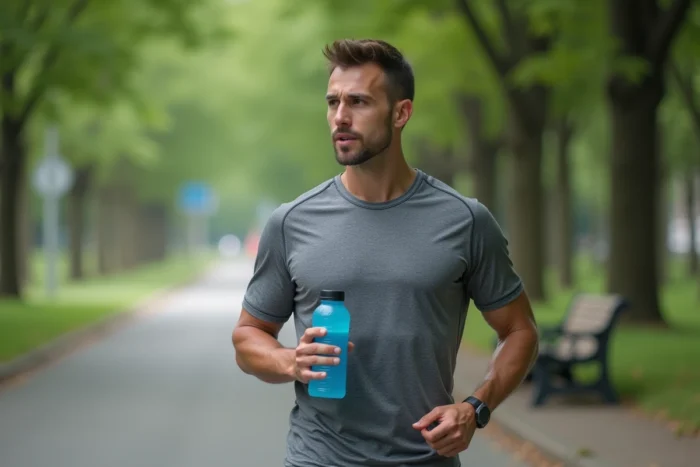
A bottle of Powerade after a workout, no one has any objections. The problem starts when this isotonic drink replaces water at the office, at the table, or in front of a screen. The available data on the daily consumption of sugary sports drinks allows us to measure the gap between the intended use by manufacturers and the reality of health effects.
Composition of Powerade compared to water and energy drinks
Before analyzing the effects of regular consumption, we need to establish what is actually in a bottle of Powerade compared to other hydration options. The table below summarizes the major differences.
| Criterion | Still Water | Powerade (500 ml) | Typical Energy Drink |
|---|---|---|---|
| Sugars | 0 g | Present (several dozen grams depending on the version) | Present, often in comparable or higher amounts |
| Caffeine | 0 mg | 0 mg | Variable, often high |
| Taurine | Absent | Absent | Present in most formulas |
| Electrolytes (sodium, potassium) | Natural traces | Added to compensate for sweat | Sometimes present, not systematic |
| Recommended Use | Regular hydration | Prolonged effort (more than 60 to 90 minutes) | Occasional boost |
Powerade contains neither caffeine nor taurine, which clearly distinguishes it from energy drinks evaluated by ANSES. However, its sugar content brings it closer to regular sodas as soon as it is taken out of the sports context.
Several analyses collecting opinions on Powerade and health converge on this point: the intake of electrolytes has measurable interest only when the body actively loses them, through sweat or during acute dehydration.

Cardiovascular risk and hypertension related to sugary sports drinks
Recent research sheds direct light on the link between daily consumption of sports drinks and blood pressure. Researchers have reported that each additional daily serving of sports drink increases the risk of hypertension by 36%. In comparison, this figure is 23% for regular sodas.
This result reverses the common perception. Many consumers view Powerade as a healthier alternative to Coca-Cola, for example. The data shows the opposite in terms of cardiovascular health when the drink is consumed without associated physical effort.
Why a more pronounced effect than sodas
The hypothesis put forward by researchers relates to the combination of sugars and sodium. The added electrolytes (sodium primarily) are designed to compensate for losses related to sweating. In a sedentary person who does not sweat significantly, the additional sodium adds to the daily dietary intake without being eliminated through effort.
Sugar, on the other hand, contributes to the same metabolic mechanisms as in any sugary drink: glycemic spike, repeated insulin demand, long-term lipid storage.
Metabolic effects of daily consumption without physical effort
Nutrition experts clearly position isotonic drinks as products for contextual use. The interest is limited to three specific situations:
- A prolonged physical effort exceeding 60 to 90 minutes, with significant sweating
- Dehydration related to vomiting or diarrhea, where electrolyte losses are real
- Prolonged exposure to heat with abundant sweating (outdoor work, heatwave)
Outside of these cases, drinking Powerade daily exposes one to the same risks as other sugary drinks: gradual weight gain, insulin resistance, increased triglycerides. The results of studies on sugary drinks apply directly.
The trap of sports marketing
The brand, owned by the Coca-Cola group, communicates around high-level sports (partnerships with the French national football team, events like the Run in Lyon). This constant association between Powerade and physical performance blurs the perception of the product among less active consumers.
No health benefits are demonstrated for a sedentary person regularly consuming this drink. Excess electrolytes do not enhance hydration or cognitive performance at the office. Still water remains the benchmark for regular hydration.

Young consumers and sports drinks: an underestimated angle
ANSES has identified young people as a population particularly concerned by the regular consumption of sugary drinks associated with sports or energy. The association between sweet taste, sporty image, and accessibility in supermarkets creates a favorable ground for normalized consumption.
The reported adverse effects for energy drinks (heart rhythm disturbances, anxiety, sleep disorders) do not directly apply to Powerade, which contains neither caffeine nor taurine. However, the impact of sugar on the metabolism of young people remains the same regardless of the packaging.
- Children and adolescents who regularly drink sports drinks without engaging in intense effort consume an often invisible caloric surplus
- The “healthy” perception of the product, reinforced by sports sponsorship, reduces parental vigilance
- “Zero” or reduced-sugar versions exist, but their sweeteners are also subject to research regarding their long-term effects
Electrolytes in daily life: when supplementation becomes unnecessary
A balanced diet largely covers the sodium and potassium needs of a moderately active person. Vegetables, fruits, dairy products, and even table salt provide these minerals in sufficient quantities.
Supplementing with electrolytes without a real deficit provides no measurable advantage. English and French-speaking nutritionists converge on this point: electrolyte solutions have no reason to be consumed daily for regular hydration.
The only reliable indicator remains the color of urine and the sensation of thirst. For the vast majority of adults, still water covers all daily hydration needs. Powerade retains its relevance in a sports bag, after a half-marathon or an intensive session in high heat. On a desk, it is just another sugary drink, with a documented cardiovascular risk that exceeds that of a simple soda.