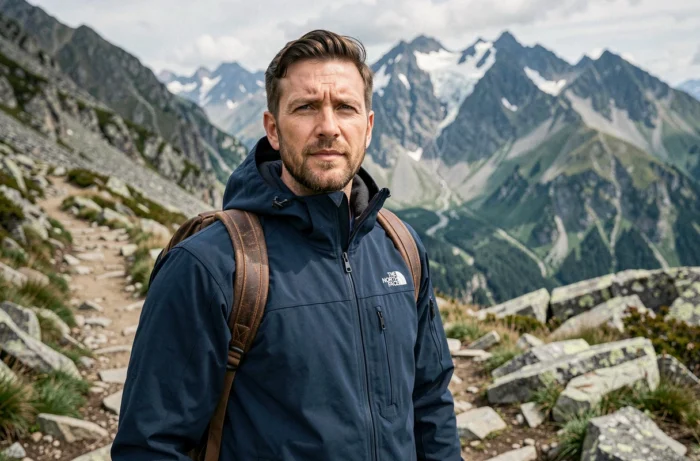
A down jacket from The North Face priced at several hundred euros, a backpack whose price exceeds that of direct competitors by more than 30%: the American brand occupies the high end of the pricing spectrum in both outdoor and urban fashion. Understanding these prices requires breaking down what happens upstream of the shelves, from the choices of the parent company VF Corporation to the regulatory constraints affecting the textile industry.
Premium product mix: the real pricing strategy of VF Corporation
Articles discussing The North Face’s pricing often mention brand recognition or the quality of materials. They overlook a more discreet but crucial lever: the management of the product mix by the parent company.
During the presentation of the first quarter 2026 results, VF Corporation executives indicated that they do not anticipate a widespread increase in catalog prices. Their approach is to steer the offering towards more premium ranges and collaborations, which have better margins, to improve profitability without a frontal increase in prices.
The result is paradoxical: the displayed prices do not formally change, but consumers see more high-end pieces in stores and online. The perception of high prices increases because the catalog itself moves upmarket. Those looking to understand why The North Face products are so expensive benefit from examining this mix mechanism rather than just the production costs.
Collaborations with fashion brands or designers fuel this positioning. Each limited capsule raises the average price and anchors The North Face in a realm where rarity justifies the margin.
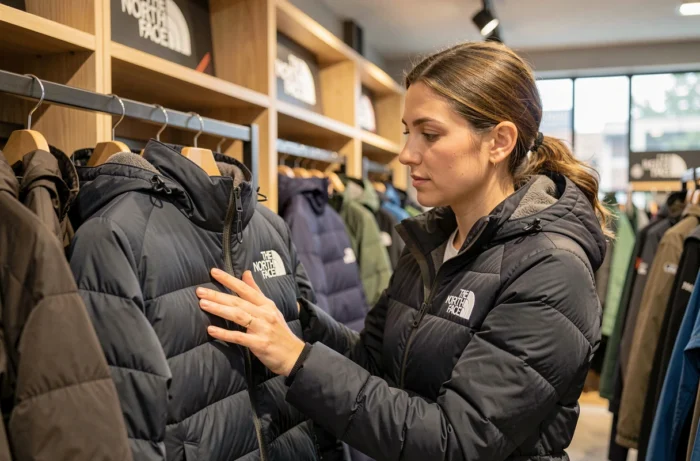
Raw materials and logistics: what price increases in Japan reveal
In the Japanese market, The North Face announced an official price revision effective August 4, 2026, directly citing increases in raw materials, labor, and logistics. The examples provided are concrete: the Himalayan Parka increases from 154,000 to 176,000 yen, and the Ascent Peak Cloud Down Hoodie from 110,000 to 132,000 yen.
These adjustments are not anecdotal. Japan often serves as a pricing laboratory for outdoor brands, as the market tolerates higher prices than in Europe or North America. When a brand passes on its costs in Japan, it signals real pressure throughout the supply chain.
The cost items that weigh the most
- High-quality goose down, whose prices have significantly increased in recent years due to global demand and health constraints on farms
- Waterproof-breathable membranes and DWR-treated ripstop fabrics, whose manufacturing depends on chemical processes under increasing regulatory pressure
- Maritime and air transport, whose rates remain higher than pre-2020 levels, with additional costs related to detour routes and freight insurance
The brand absorbs some of these increases through its margins but also gradually passes them on according to the markets. The price of a down jacket reflects both the cost of materials and the logistical complexity required to transport components from several production countries to distribution centers.
European regulation on PFAS and packaging: an invisible cost
A factor rarely mentioned in outdoor pricing analyses concerns the new European rules on packaging and chemicals. In August 2026, new European regulations on packaging came into effect, with stricter restrictions on plastics and per- and polyfluoroalkyl substances (PFAS).
PFAS are precisely the compounds used in DWR water-repellent treatments applied to most outdoor jackets and pants. The North Face must reformulate its treatments to comply with European restrictions, which involves investments in research, performance testing, and sometimes a change of supplier.
These compliance costs do not appear on any label, but they are reflected in the final price. Brands selling in Europe must also adapt their packaging, reduce single-use plastics, and document the traceability of their materials. For a brand with a catalog of hundreds of technical references, the burden is significant.
The North Face facing outdoor competition: is the price gap justified?
Comparing The North Face to its direct competitors (Patagonia, Arc’teryx, Columbia) helps to situate the real gap. In the alpine technical ranges, Arc’teryx often has prices higher than those of The North Face. In the entry-level ranges, Columbia offers significantly lower prices.
The North Face positions itself in between, which makes the perception of high prices relative to the chosen point of comparison. A hiker accustomed to Columbia will find The North Face expensive. A climber comparing it to Arc’teryx will consider it reasonable.
What truly distinguishes the positioning
The brand derives an increasing share of its revenue from the lifestyle and urban segment, where competition includes streetwear brands with even higher margins. The streetwear effect has shifted the reference point: the customer buying a Nuptse does not compare it to a hiking down jacket but to a Supreme or Stüssy jacket.
This shift explains why prices do not decrease despite large-scale production. The brand has no interest in playing the cheap volume card when its image allows it to capture a clientele willing to pay a premium.
The pricing structure of The North Face results from a combination of factors that go beyond just the quality of materials. Management of the mix by VF Corporation, documented increases in production costs, European regulatory constraints, and positioning between technical outdoor and urban fashion form a coherent whole.
Field feedback varies on whether this coherence justifies every euro spent, but the price reflects a deliberate strategy much more than a simple manufacturing cost increase.