CDC Habitat, the real estate subsidiary of the Caisse des Dépôts, manages a portfolio of several hundred thousand housing units in France: social housing, intermediate housing, student residences, and senior residences. When a problem arises in a housing unit (leak, heating failure, administrative question), the speed of response depends on the chosen contact channel and the information provided from the first exchange.
Information to Prepare Before Contacting CDC Habitat
Calling or writing without having your file on hand extends the processing time. The Customer Contact Center systematically requests specific elements to identify the tenant and direct the request to the appropriate contact.
Before any contact, gather this information:
- Your tenant number (found on your rent receipts or your due notice), which allows the advisor to access your file directly.
- The complete address of the housing unit, including the building and stairwell number if your residence has multiple.
- A factual description of the problem: location in the housing unit, date of occurrence, any recurrence. The more precise the description, the fewer back-and-forth exchanges there will be.
- Photos or useful documents (water damage report, received correspondence), to attach if the contact is made via the online space.
This preparatory work reduces the duration of the exchange and speeds up the processing of the request from the first contact. To better understand each available channel, a detailed guide on contacting CDC Habitat’s customer service summarizes the contact details and procedures to follow according to your situation.

CDC Habitat and Me Tenant Space: The Fastest Channel
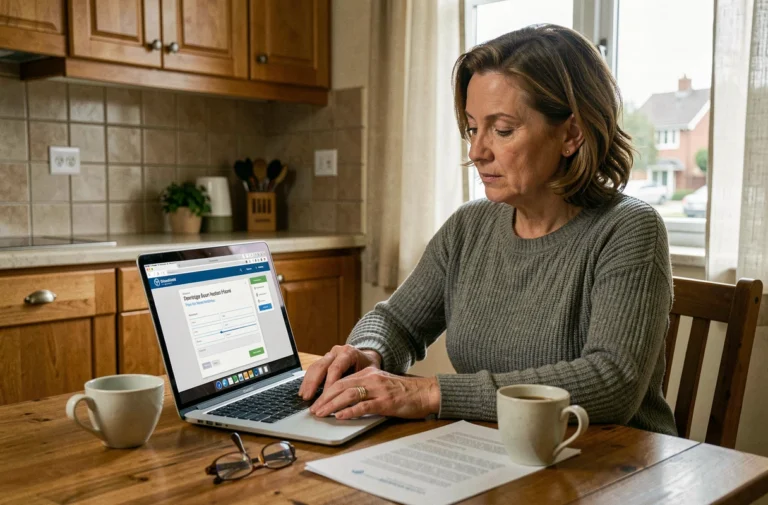
The online space “CDC Habitat and Me” and its mobile app are the preferred channel by the landlord. Accessible at all times, this space allows for written requests, attachment of documents, and tracking the progress of the file without depending on phone opening hours.
Useful Features to Save Time
From this space, a tenant can download their receipts, check their balance, and most importantly, send a timestamped complaint with real-time tracking. Each request receives a tracking number, which avoids having to re-explain the situation in case of follow-up.
A virtual assistant guides navigation and directs to the correct category of request. If the automatic response is not sufficient, a LiveChat connects with a human advisor, Monday to Friday (excluding public holidays), from 8 AM to 6 PM.
The written record generated by this channel also protects the tenant in case of subsequent disputes: dates, content of exchanges, and response times are archived in the file.
Contacting CDC Habitat by Phone: Numbers and Time Slots
The phone remains the reflex for many tenants, but not all numbers correspond to the same entity. The advisors at the Customer Contact Center are based in Dijon and Montpellier.
- For tenants of CDC Habitat and CDC Habitat social: the number is 09 73 321 421, charged at the cost of a local call.
- For tenants of Sainte-Barbe: the dedicated number is 09 72 678 090.
- Outside of opening hours, an emergency service takes over for critical situations (major leak, elevator failure trapping a person, dangerous electrical problem).
Peak times are concentrated in the early morning and late afternoon. Calling between 10 AM and 12 PM or between 2 PM and 4 PM increases the chances of quickly reaching an advisor.
Differentiating Technical Emergency and Routine Request
The emergency service, reachable at night, on weekends, and public holidays, is reserved for incidents that threaten the safety of individuals or the integrity of the building. A dripping faucet or a question about a charge notice does not fall under this provision.
Using the emergency number for a non-urgent request clogs the line and extends the response time for tenants who are genuinely in difficulty. In case of doubt, the online space remains the best option to formulate the request and receive a response in a reasonable timeframe.
Guardians and Sector Managers: The Often Underestimated Field Relay
The official contact pages highlight the phone and online space, but a third channel exists daily: local staff. The building guardians and sector managers of CDC Habitat are explicitly tasked with handling tenant complaints on the ground.
Their role is not limited to maintaining common areas. They liaise with technical services, monitor the follow-up to interventions, and can directly forward a complaint to the appropriate internal service. For a visible problem (deterioration in common areas, recurring noise nuisance, bulky item blocking access), going through the guardian often leads to a quicker response than a call to the Contact Center.
In some agencies, tenant feedback published in the summer of 2026 on verified review platforms highlights notable responsiveness, with comments mentioning “quick handling” and “good listening.” However, the quality of response varies from one agency to another, confirming the interest of combining several channels if the first remains unanswered after a few days.
Postal Mail and Mediation: Recourse in Case of Blockage
When the usual channels do not yield results, sending a registered letter to the local agency or the head office formalizes the complaint and triggers enforceable deadlines. The head office of CDC Habitat is located in Paris.
If no satisfactory response is received after exhausting internal avenues, referring to the mediator is the next step. The rental management charter of CDC Habitat provides for this recourse. The mediator examines the files previously handled by customer service, making the compilation of a complete file (copies of exchanges, photos, dates) crucial for the outcome of the procedure.
A tenant facing a health hazard without a response from the landlord can also report the situation to the hygiene service of their municipality, which has inspection powers independent of the landlord.
The fastest channel remains the “CDC Habitat and Me” space for routine requests, the phone for situations requiring immediate exchange, and the guardian for observable problems on-site. Keeping a written record of each exchange, regardless of the channel used, remains the best protection in case of prolonged disagreement.