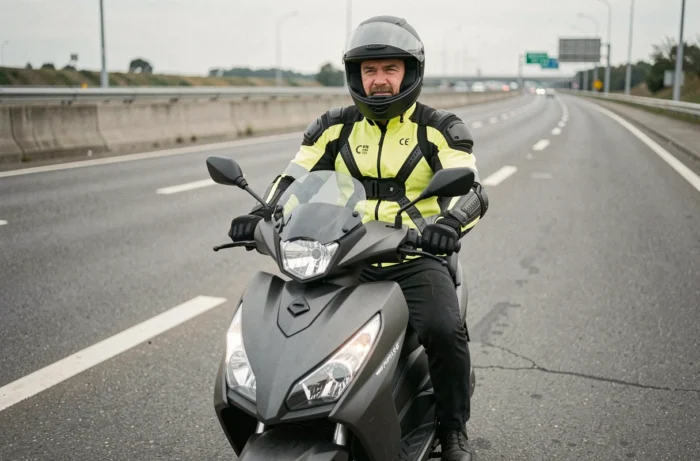
A 125 scooter is legally allowed to travel on highways in France. Since December 14, 2024, regulations confirm access to fast lanes for thermal two-wheelers of at least 120 cm³. The question is no longer about the right of access, but rather about the actual ability of a 125 to keep up with highway speeds without compromising the safety of the rider.
Fatigue and engine speed: the real limit of the 125 on fast lanes
Specialized forums and field feedback converge on one point that technical specifications do not show: a 125 can reach the necessary speed to ride on the highway, but it often does so by pushing its engine to a speed close to the maximum. Over a few kilometers, the difference with a larger displacement remains manageable.
However, with daily use or long highway stretches, mechanical and physical fatigue accumulates. The engine runs high, vibrations increase, and the rider must stay focused to maintain a speed compatible with the flow of traffic. This distinction between occasional use and regular use largely conditions the choice of model.
Finding a 125 scooter suitable for the highway therefore requires prioritizing GT-oriented models, designed to withstand these constraints over time rather than urban scooters repositioned for the road.
125 GT scooter for the highway: what distinguishes a road model from an urban model
Not all 125 scooters are equal when faced with the demands of a fast lane. The difference between an urban model and a GT-oriented model lies in several concrete elements that directly affect safety and comfort at high speeds.
- Aerodynamic protection: a tall, wide windshield reduces wind pressure on the torso, which decreases fatigue on long trips. Compact urban scooters provide minimal protection beyond 90 km/h.
- The seat and seating position: a wide seat with sufficient setback prevents sliding forward due to deceleration. GT models also offer footrests positioned to keep the legs at a less tiring angle.
- ABS braking: on the highway, emergency braking on wet pavement can make the difference between a controlled stop and a fall. ABS is a non-negotiable criterion for highway use.
- Wheel stability: larger diameter wheels (14 or 15 inches at the front) improve directional stability, especially against crosswinds or air displacement caused by heavy trucks.
Honda Forza 125 and direct competitors: which model truly holds the road
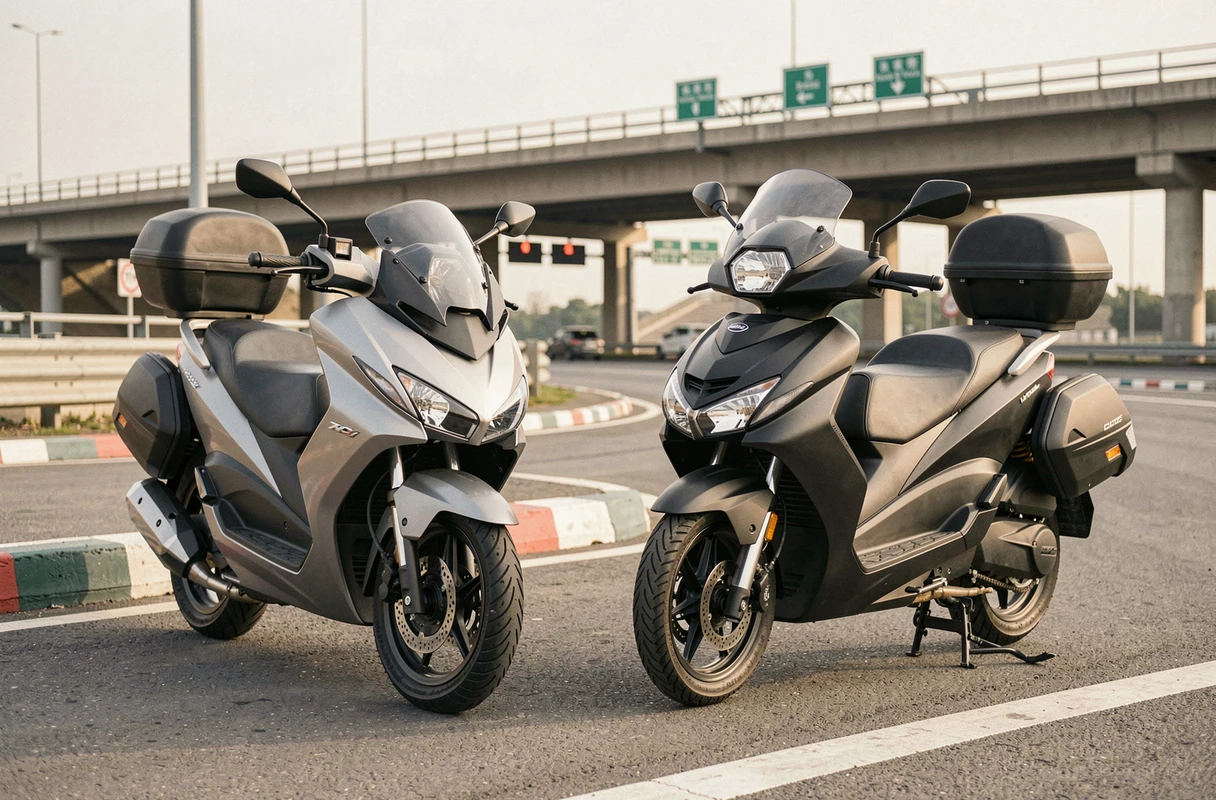
The Honda Forza 125 consistently appears in comparisons as the reference for mixed city-highway use. Its GT orientation, with an adjustable windshield, a comfortable seat, and an engine calibrated for mid-range speeds, makes it a credible compromise for regular highway stretches.
The Yamaha X-Max 125 positions itself in a similar niche, with a slightly sportier orientation. Both models share standard ABS braking and wheels of sufficient size for good stability at high speeds. These two GT scooters have dominated the 125 road segment for several years.
Field feedback diverges on the issue of passengers. With a solo rider, these models hold their own on the highway. Adding a passenger significantly reduces acceleration and comfort, making merging and overtaking more challenging. Several specialized sources point out that a 125 with a passenger on the highway reaches the limits of what the displacement can offer in terms of safety.
The case of repositioned urban scooters
Models like the Honda PCX 125 or the Peugeot Tweet 125 are sometimes presented as versatile. They can technically access the highway, but their urban design (small wheels, limited protection, short seat) makes them significantly less suitable for regular use on fast lanes. An urban scooter on the highway remains a stopgap solution, not a sustainable choice.
Insurance and equipment: two often overlooked angles for safe riding
Choosing the right model is not enough. The insurance for a 125 scooter used on the highway deserves special attention. Some insurance policies distinguish between urban use and road use, and the coverage related to bodily injury or theft in a highway rest area varies by contract.
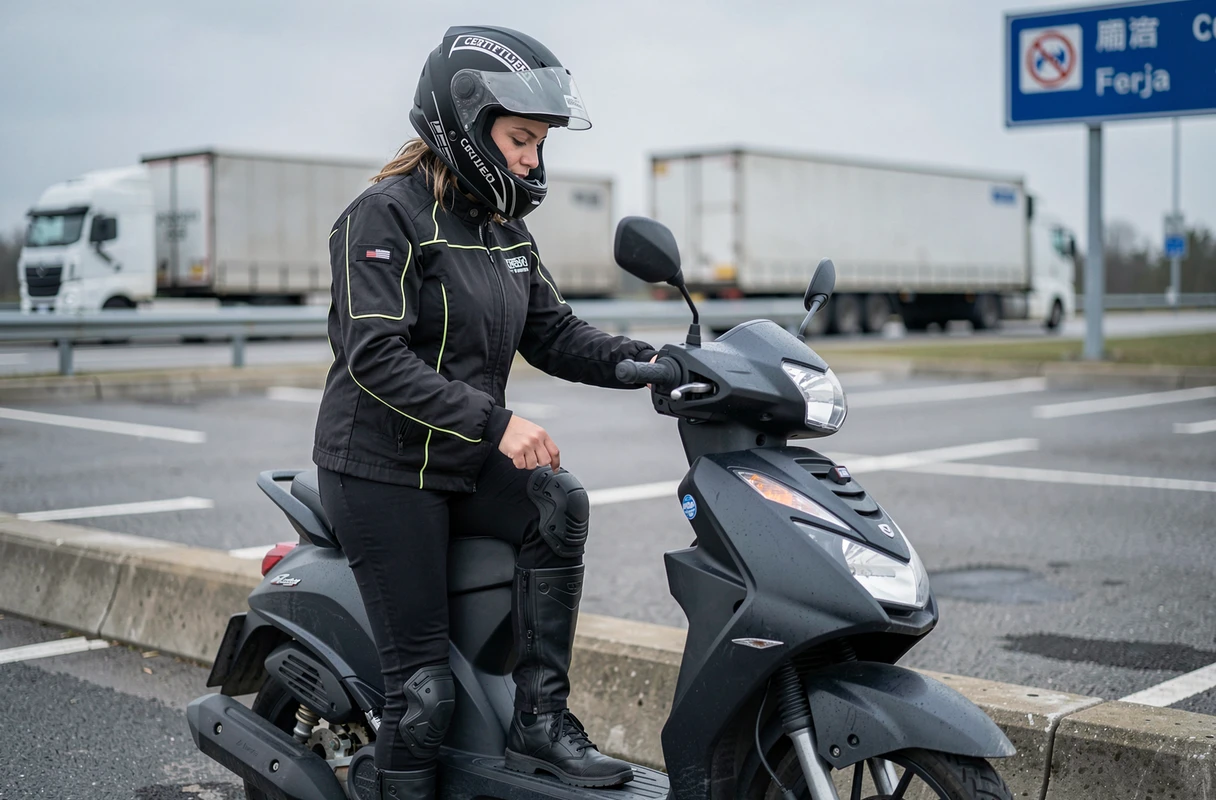
The rider’s equipment also plays a direct role in safety at high speeds. A full-face helmet rather than a jet helmet, certified gloves, a jacket with back and elbow protections: these choices are not about comfort but about protection in case of a high-speed fall.
- The jet helmet, common in the city, offers no chin protection or sufficient sound insulation beyond 100 km/h.
- CE-approved gloves are mandatory, but their level of protection varies: prioritize reinforced models at the joints.
- An airbag vest, long reserved for motorcyclists, is starting to become more mainstream and represents an additional relevant protection on the highway.
When the 125 is no longer enough: identifying the tipping point towards the maxi-scooter
The boundary between a 125 usable on the highway and a 125 insufficient depends on three concrete parameters: the frequency of highway trips, the distance traveled on each trip, and the presence or absence of a passenger.
For an occasional trip of a few kilometers on a fast lane, a well-chosen 125 GT scooter fulfills its role. Beyond two to three highway trips per week, a maxi-scooter becomes more relevant. The additional power margin offers safer acceleration, reduced fatigue, and the ability to handle emergency situations (rapid overtaking, merging into dense traffic) that the 125 manages with less margin.
Transitioning from a 125 to a maxi-scooter, however, requires an A2 or A license, a higher purchase and maintenance budget, and more expensive insurance. This calculation remains personal, but safety on the highway depends as much on the choice of displacement as on the honesty of the rider regarding their actual needs.