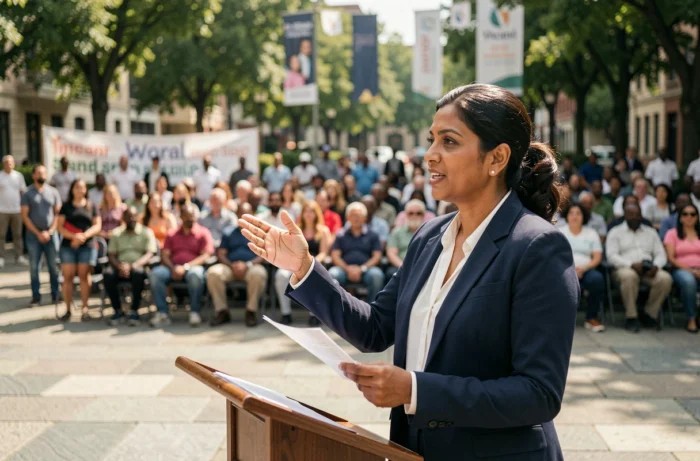
The Women, Peace and Security agenda remains the poor relation of women’s engagement policies on a global scale. More than half of the UN member states have adopted national action plans related to Resolution 1325, but implementation is stagnating: persistent under-representation in peace processes, insufficient funding, and the absence of binding monitoring mechanisms. We observe a structural gap between statements of intent and measurable results on the ground.
Resolution 1325 and Peace Processes: An Underutilized Normative Framework
The Security Council’s Resolution 1325 established, over two decades ago, the principle of full participation of women in conflict prevention and resolution. The text has generated a dense normative architecture: national action plans, periodic reports, monitoring indicators.
The problem does not lie in the absence of a framework, but in its operational translation. Women remain marginal in negotiation delegations, and the budgets allocated to the gender component of peacekeeping missions remain a residual fraction of the overall envelopes.
National action plans, when they exist, often suffer from a lack of inter-ministerial coordination. A foreign ministry may carry the agenda without the defense or interior ministries being involved. This compartmentalization dilutes the impact and transforms ambitious commitments into declarative exercises.
Documentary resources allow for tracking these dynamics, notably on https://www.femmesmonde.org/, which lists analyses on women’s engagement around the world.

Women’s Engagement and Climate Governance: An Underutilized Lever
Field initiatives linking women’s participation and climate adaptation are multiplying, but their institutional recognition remains weak. In Chad, water governance projects involving women in local management committees face three recurring obstacles: low representation in decision-making spaces, socio-cultural burdens, and lack of technical training.
This pattern is found in most countries in the Sahel and sub-Saharan Africa. Women carry out a majority of the daily management of natural resources (water collection, subsistence agriculture, soil management) without being involved in the strategic decisions regarding the allocation of these same resources.
Structural Barriers to Decision-Making Participation
The gap between operational responsibility and decision-making power is not an accident. It reflects governance architectures designed without consideration of gender. Local water management committees, for example, often reproduce existing social hierarchies.
- Access to technical training on water resource management remains unequal, with programs rarely targeting women as a priority audience
- The criteria for selecting local representatives (land ownership, customary status) effectively exclude the majority of women
- The scheduling of decision-making meetings ignores time constraints related to domestic responsibilities
Integrating gender into local climate governance requires rethinking selection mechanisms, not simply adding quotas to existing structures.
Economic Empowerment of Women: Beyond Entrepreneurial Discourse
We see a trend to reduce women’s economic empowerment to mere business creation. Successful programs rely on a broader triptych: access to networks, targeted training, and financial inclusion.
The World Bank highlights support mechanisms for self-help groups and market access. These programs go beyond individual microcredit to structure value chains where women hold negotiation positions, not just production roles.
Network Mechanisms and Self-Help Groups
In West Africa, women’s self-help groups constitute a parallel economic infrastructure often more effective than formal mechanisms. In Kati, Mali, training and solidarity programs led by local actors show that training combined with collective action produces sustainable results.
The model is based on three pillars:
- A learning of technical skills directly related to the local market (agro-food processing, crafts, trade)
- A pooling of financial resources that reduces dependence on traditional bank credit, often inaccessible
- A social leverage effect: participation in the group changes women’s status in their community and facilitates their access to decision-making spaces
This model cannot be directly transposed into all contexts. But it illustrates a principle that public policies underestimate: economic empowerment comes through the collective before the individual.
Political Participation of Women: Fragile and Reversible Progress
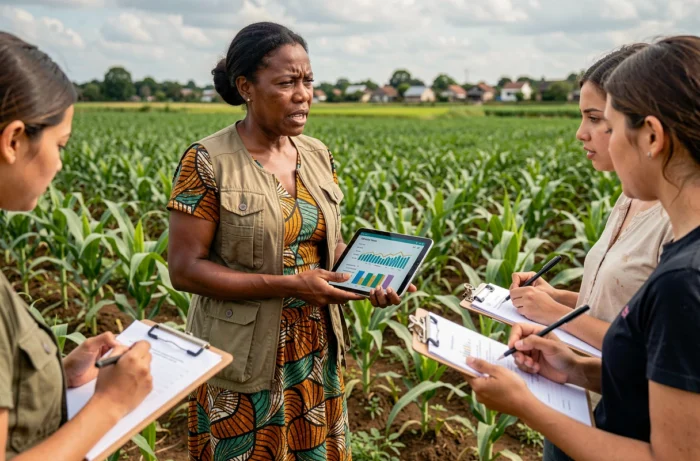
One in four countries reported a rollback of women’s rights in 2024 according to data reported by UN Women, derived from over 150 governments. This rollback primarily affects political participation: restrictions on civic space, challenges to electoral quotas, and reductions in funding dedicated to feminist organizations.
The CSW69, held in New York last March, highlighted this fragility. Concerns about the lack of progress towards gender equality have significantly increased, confirming that gains in women’s rights are never permanent.
In the Democratic Republic of Congo, a recent study on the barriers to political participation of Congolese women identifies obstacles that go beyond legal discrimination: the cost of electoral campaigns, targeted violence against candidates, and low media coverage of women in politics.
The Role of Transnational Feminist Networks
In the face of these setbacks, transnational feminist networks play a monitoring and advocacy role that multilateral institutions struggle to assume alone. The Women 20 (W20), the official engagement group of the G20, carries recommendations on financial inclusion and political participation of women to heads of state.
These networks partially compensate for the disengagement of some governments. Their limitation remains their dependence on international funding cycles and current geopolitical priorities.
The engagement of women worldwide is neither limited to inspiring portraits nor to global statistics. It takes place in local water management committees in Chad, in self-help groups in Mali, in peace negotiations where their absence weakens the sustainability of agreements. Concrete inclusion mechanisms determine outcomes more than statements of principle.